- Indian Cooking
- Indian Spices
- Cooking Tips
- Masala Guide
- Whole Spices
- Ground Spices
Whole Spices vs. Ground Spices: What’s the Difference, and When Should You Use Them?
November 26, 2026
Whole Spices vs. Ground Spices: What's the Difference?
Indian cooking is famous for its incredible depth of flavour. From comforting dals and rich curries to fragrant biryanis and everyday sabzis, spices are what give each dish its personality.
But there's one question that many home cooks overlook: should you use whole spices or ground spices?
While both have an important place in Indian kitchens, understanding when and how to use them can make a remarkable difference to your food.
Let's break it down.
What Are Whole Spices?
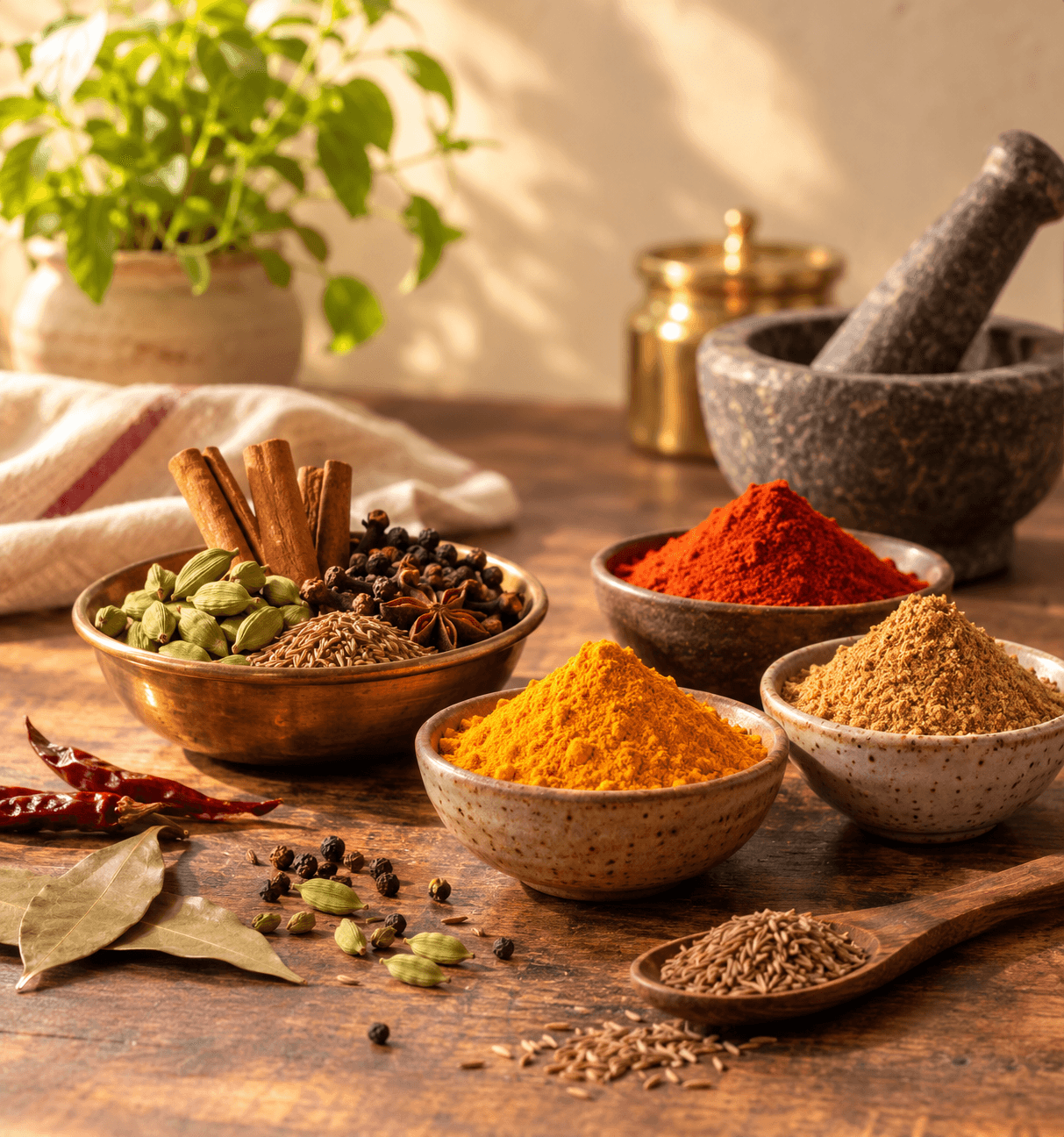
Whole spices are spices used in their original, unground form. Some familiar examples include:
- Cumin seeds (Jeera)
- Green cardamom (Elaichi)
- Cinnamon (Dalchini)
- Cloves (Laung)
- Black peppercorns (Kali Mirch)
- Mustard seeds (Rai)
- Bay leaves (Tej Patta)
Whole spices are commonly added to hot oil or ghee at the beginning of cooking. This process, often called tempering or tadka, helps release their natural aromas and infuse the cooking medium with flavour.
For example, adding cumin seeds to hot ghee before preparing dal gives it a wonderfully familiar aroma.
What Are Ground Spices?
Ground spices are made by grinding whole spices into a fine or coarse powder.
Some everyday examples include:
- Turmeric powder
- Red chilli powder
- Coriander powder
- Cumin powder
- Garam masala
- Kitchen king masala
Ground spices are particularly useful when you want flavour to distribute evenly throughout a dish.
They are commonly added while preparing curry bases, marinades, gravies and vegetable preparations.
The key is to cook them properly. Adding powdered spices to a little oil or mixing them with the cooking base helps develop their flavour. Avoid burning them, as this can make a dish taste bitter.
When Should You Use Whole Spices?
Whole spices work particularly well when you want to build an aromatic foundation.
Here are a few examples:
For dal: Start with cumin seeds, mustard seeds or dried red chillies in hot ghee.
For biryani: Use whole cardamom, cloves, cinnamon and bay leaves to create a fragrant base.
For pulao: A few whole spices can give the rice a beautiful aroma without overpowering it.
For everyday curries: Tempering whole spices in oil before adding onions and tomatoes can add another layer of flavour.
When Should You Use Ground Spices?
Ground spices are ideal for building the main flavour profile of a dish.
For paneer gravies: Coriander powder, turmeric and chilli powder help create a rich, well-seasoned base.
For chana masala: A carefully balanced combination of ground spices gives chickpeas their characteristic depth.
For vegetable dishes: A little cumin powder, coriander powder and garam masala can transform simple vegetables.
For marinades: Ground spices combine easily with yoghurt, lemon juice and other ingredients to coat vegetables, paneer and meat evenly.
Why Freshness Matters When It Comes to Masalas
One of the most important things about spices is their freshness.
Over time, ground spices can lose some of their characteristic aroma and flavour, particularly when exposed to heat, moisture, air and sunlight.
This is why proper storage matters.
A few simple tips:
- Store spices in airtight containers.
- Keep them away from direct sunlight.
- Avoid storing them next to your cooking stove.
- Always use a dry spoon.
- Buy quantities that you can reasonably use while they are still fresh.
Good spices deserve good storage!
Can You Use Whole and Ground Spices Together?
Absolutely! In fact, this is one of the easiest ways to create depth in Indian cooking.
Imagine preparing a simple vegetable curry.
You begin by tempering cumin seeds in hot oil. Next, you add onions, ginger and tomatoes. Once the base is cooked, you introduce turmeric, coriander powder and chilli powder.
Finally, you finish with a little garam masala.
Each stage contributes something different to the final dish.
That's the beauty of Indian cooking: flavour is built gradually, one ingredient at a time.
The Secret Is Not Using More Spices, But Using Them Well
It's easy to assume that adding more masala automatically makes food tastier. But great cooking is really about balance.
Every spice has its own aroma, intensity and character. The right proportions allow individual flavours to complement one another rather than compete.
A thoughtfully prepared masala blend can make this process much easier, especially when you're cooking familiar dishes and want consistent flavour.
At Kardemome, we believe that good food starts with good ingredients and attention to detail. It's this appreciation for authentic flavours that inspires everything we create.
Whether you're an experienced home cook or someone just beginning to explore Indian cuisine, understanding your spices is a wonderful place to start.
After all, sometimes the smallest pinch makes the biggest difference.
Happy cooking!